














Furnishing a new home should be an exciting moment. You’ve probably dreamed about a fresh start for a long time – and this is your moment to get one.
Planning and preparation are crucial to making this a success, though. The trick isn’t to buy everything at once, but instead to work with the property itself.
If you’re wondering how to choose furniture for a new home, then keep reading for a clear guide.
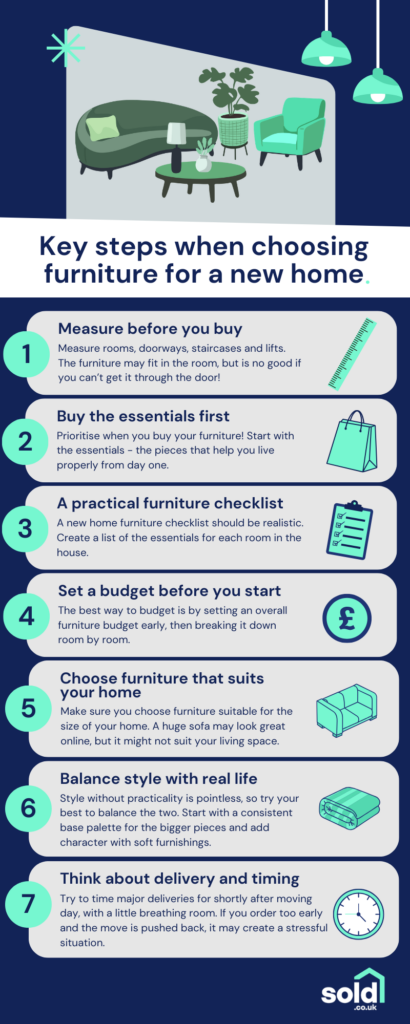
Measure before you buy
Measure your rooms, doorways, staircases and lifts, along with the hallways, ceiling heights, alcoves and any tight access points.
A sofa might technically fit in your living room, but that’s no good if it can’t get through the front door. A wardrobe might look perfect online, but if it blocks a window, it’s not ideal.
Use your floorplan if you have one, then double-check the measurements. Consider marking out furniture sizes on the floor with masking tape.
Online room planners can also help you measure furniture for a new home properly before you commit. Especially if you’re trying to decide between two layouts.
Buy the essentials first
You need to prioritise when you buy your furniture. After moving house and all the fees that come with it, your bank account is probably a bit bruised.
Start with the essentials. These are the pieces that help you live properly from day one. It usually involves a bed and mattress, somewhere to sit, dining seating, wardrobes or clothes storage, and any furniture needed for your daily routine.
If you work from home, a desk and a proper chair may be more urgent than if you don’t.
A practical new home furniture checklist
A new home furniture checklist should be realistic. In the living room, most people need a sofa, a TV unit (if you use one), lighting, and some storage.
For bedroom furniture, start with the bed, mattress, bedside tables, wardrobe, chest of drawers and a mirror. If space is tight, storage beds can be brilliant.
Dining furniture is only useful if you have regular family meals. Likewise, home office furniture is more important when you work remotely.
Hallways and storage furniture are often forgotten, which is odd because clutter usually starts at the front door. Shoe storage, coat hooks, console tables, baskets and slim cupboards can make daily life feel calmer.
Set a budget before the spending starts
Furniture costs can run away with you because each purchase feels separate.
Set an overall furniture budget early, then break it down by room. Allow for delivery, assembly, returns, accessories, and other small details such as curtain poles.
Second-hand, ex-display, upcycled, rented or temporary furniture can all make sense, particularly after an expensive move.
Just be sensible with upholstered furniture. Check fire safety labels where relevant, avoid items with exposed foam or unknown damage, and pay attention to product recalls.
Choose furniture that suits your home
This sounds obvious, but many people choose furniture for the life they imagine rather than the home they have.
For smaller homes, multifunctional furniture is your friend. Think storage beds, nesting tables, benches with hidden storage, or modular sofas.
If you’re downsizing, measure your existing furniture before deciding what to keep. Some beloved pieces will work beautifully, while others may be too much.
Sold’s guide to Understanding Downsizing Houses is a useful read if you’re still weighing up what to take with you.
Balance style with real life
Style without practicality is pointless, so try your best to balance the two.
Start with a consistent base palette for the bigger pieces. Sofas, beds, wardrobes and dining tables are expensive to replace, so it makes sense to choose pieces that can survive changing tastes.
Don’t forget that you can add personality with cushions, artwork, rugs, lamps and smaller items. Try not to design your whole home around one trend, as these tend to move quickly.
Think about delivery and timing
If you’re buying furniture before moving, be careful. Completion dates can shift and deliveries can be delayed.
If you order too early and the move is pushed back, you may find yourself trying to redirect furniture to a house you don’t yet own.
Try to time major deliveries for shortly after moving day, with a little breathing room. Give suppliers clear delivery instructions and check whether there are fees for changing dates.
If you’re bringing old furniture and buying new pieces, clean existing items before placing them next to new ones. Otherwise, the contrast can be surprisingly obvious.
Sold’s moving day checklist can help here, especially if you’re juggling removals, deliveries and last-minute admin at the same time.
Common mistakes to avoid
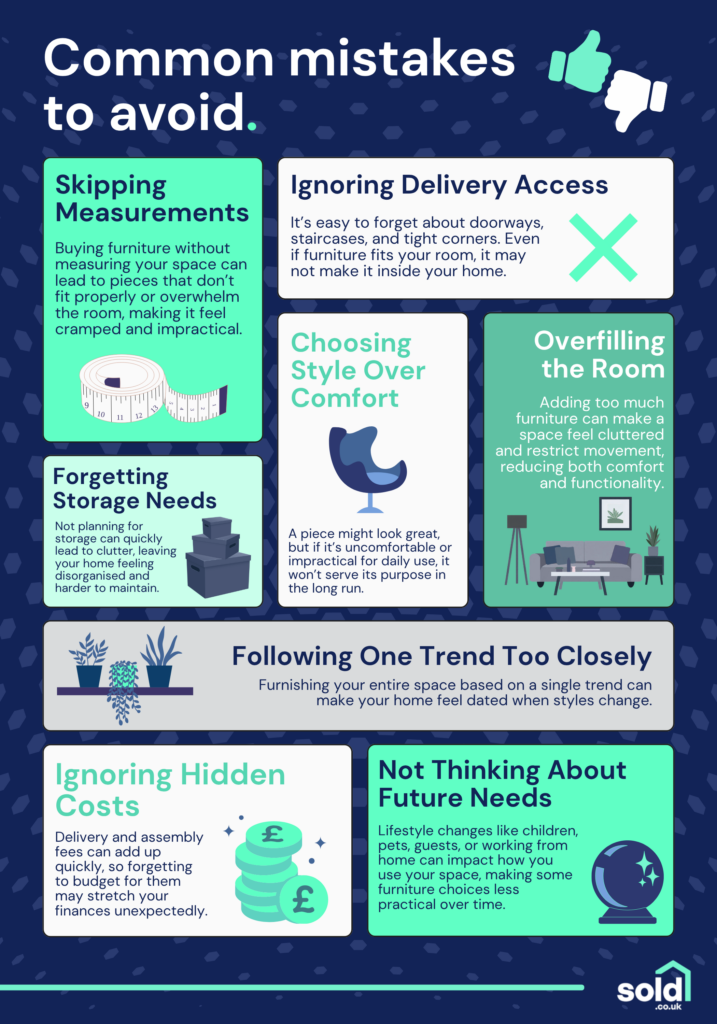
The classic first-time buyer mistake is buying before measuring, while the second is ignoring delivery access.
Other common errors include overfilling rooms, forgetting storage, and buying everything from one short-lived trend. Make sure to leave enough budget for delivery costs and all other costs when moving house, too.
It’s also worth thinking about how your home may change. Are you planning on having children, pets, lodgers, regular guests or more home working? Your furniture will need safety precautions if you’re planning to have children soon.
Still need to sell before furnishing your next home?
Planning furniture is much easier when your sale timeline is clear. Focus first on staging your current property and getting it ready.
Decluttering, staging and preparing for property photos can all help make your home more appealing to buyers. Conveniently, they also help you work out what furniture you need for a new house.
If an item looks tired in your current home, it probably won’t magically look better in your next one.
Sold can support homeowners who are still deciding how to sell, whether you want help marketing your home through an estate agency route or want to explore a faster cash-offer option.
Frequently Asked Questions
What furniture should I buy first for a new home?
Start with the essentials: bed, mattress, sofa, and dining seating. This also includes a wardrobe or clothes storage and any desk or chair you need for work.
How do I know if furniture will fit?
Measure the room, doorways, stairs, lifts and access points. Use masking tape to mark the furniture footprint on the floor before ordering.
Should I buy furniture before moving?
Buy carefully. Essentials may be worth arranging, but avoid ordering too much before completion is certain. Delivery timing can become awkward if your move is delayed.
How much should I budget for furniture?
It depends on the size of the home and what you already own. Set a total budget, prioritise high-use items, and leave room for delivery, assembly and accessories.
How can I furnish a small home?
Choose multifunctional pieces, use vertical storage, avoid oversized sofas, consider extendable dining furniture and leave enough empty space for rooms to breathe.
Take your time when buying furniture
Don’t rush into buying furniture without analysing your budget, space, and lifestyle. Let the rest of your home develop over time.
If you’re still preparing to move, Sold can help you understand your selling options, whether you want support marketing your home or a faster cash-offer route before furnishing a new home.