













Marketing your property isn’t straightforward. Each month, there are thousands of people all over the country wondering how to market a home. Is it complete luck, or is there a best way to market a house for sale?
The truth is, there’s a complete skill to marketing your property. And one of the growing tools used to achieve this is videos, including property video tours and virtual house tours.
Other applications include short social media clips, a lifestyle video showing the house, garden and local area, or an interview with the owner.
Done well, videos for property marketing can help a home feel real before a buyer steps through the door. It’s not a magic wand, though, and you need to put careful thought into your video marketing strategy to make it work.
Why video matters when selling a home
For years, photos have been the main visual tool to sell a house – but that’s quickly changing.
A buyer can look at ten photos and still not understand how the kitchen connects to the dining room, where the stairs sit, or whether the garden feels overlooked. Property video tours help buyers understand layout, flow and atmosphere in a way photos often cannot.
This is especially useful now because buyers are doing more homework before viewing. A good video can help people decide whether the property is worth seeing in person. That means fewer wasted viewings and, hopefully, more serious buyers.
The main types of property video
When you want to sell your house online, you need to understand the full range of videos for property marketing available to you.
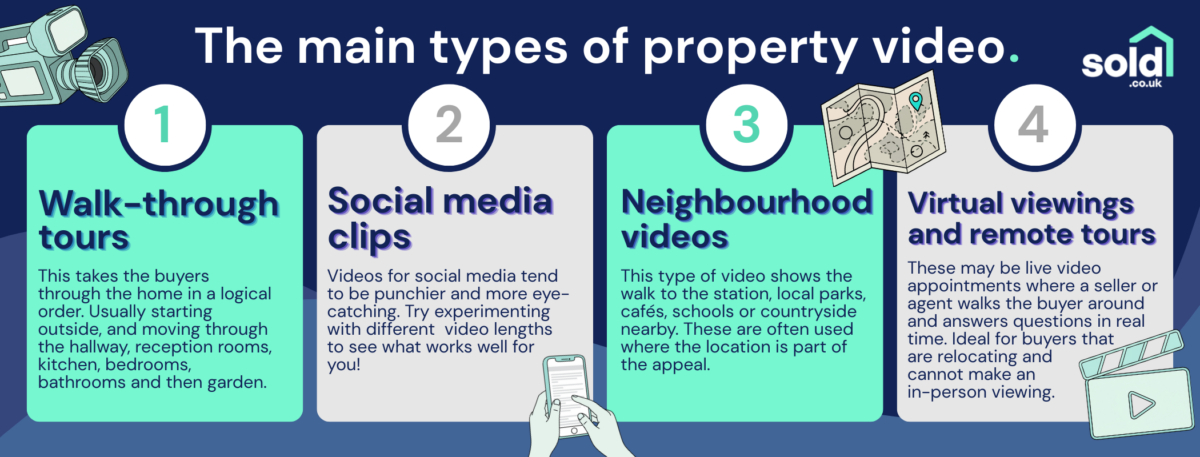
The best way to approach marketing a house usually includes a walk-through tour. This takes buyers through the home in a logical order, usually starting outside. It moves through the hallway, reception rooms, kitchen, bedrooms, bathrooms and garden.
Then there are short social media clips, which tend to be punchier and more eye-catching. You’ll find an attractive backdrop on your property, and then talk to the camera.
Lifestyle or neighbourhood videos go a step wider. They might show the walk to the station, local parks, cafés, schools or countryside nearby. This can work well where the location is part of the appeal.
Virtual viewings and remote tours are different again. These may be live video appointments where a seller or agent walks the buyer around and answers questions in real time.
Video should support the listing, not replace it
It’s important that you take videos for property marketing seriously and consider all the options listed above. That doesn’t mean it replaces all the other crucial marketing details, though.
Preparing your house for sale is an important first step, and the ‘for sale photos’ are still hugely important. Potential buyers will see this on platforms like Rightmove or Zoopla. They may get to these before they see the video – and first impressions count.
To attract attention in the local area, putting a ‘for sale’ sign outside your house is still a great bet. If you live on a major road, this can get thousands of eyes on your house every day.
Your pricing needs to be spot-on, obviously, because even the best marketing in the world doesn’t compensate for a ridiculous asking price. And give clear information, too, such as a floor plan and up-front documentation.
So, if you are thinking about how to market a house, treat video as a booster, not the whole engine. It should make your listing stronger, not cover up weak basics. That way, you won’t be scratching your head wondering why your house isn’t selling.
What makes a strong property video?
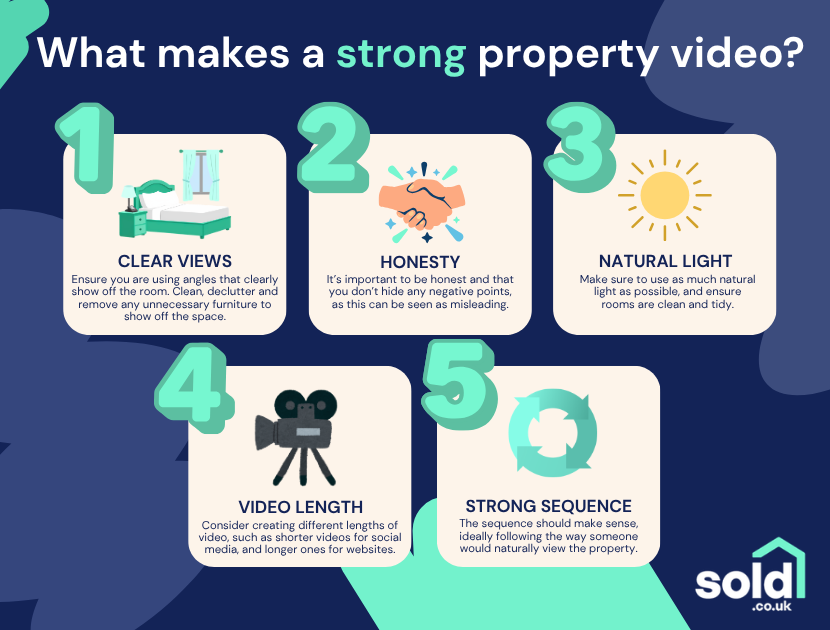
A strong property video is clear, bright, steady and useful. That may sound obvious, but plenty of property videos fail on at least one of those points.
Make sure to use as much natural light as possible, and tidy the rooms first. The camera movement should be smooth, not shaky. And the sequence will ideally make sense, following the way someone would naturally view the property.
Length matters as well. You can vary this based on the platform – such as shorter videos for social media, and longer ones for websites.
Above all, the video should be honest. Propertymark’s guidance on video viewings says bad points should not be hidden, as it could count as a misleading omission. Be careful with this: a video should present the property well, but not mislead people.
Preparing before filming
Before filming, prepare the property just as carefully as you would for photographs. Clean, declutter and fix obvious visual problems. Ask for a second opinion on this, if you’re unsure. Small things make a big difference on camera.
Perhaps consult a guide on How to Prepare Your House for Sale Photos, because the same rules apply. A clean, bright, lived-in home is often more appealing than one that looks like a furniture showroom with no soul.
Common mistakes to avoid
Over-editing your video marketing for property is one of the most common mistakes. Dramatic music, strange filters and fast cuts may look trendy, but it can also put buyers off. When it’s over-produced, they may feel like you’re hiding something.
Another mistake is focusing too much on style and not enough on useful information. Show the storage and garden access. You could also outline how the rooms connect. If you’ve got parking, then show it.
It’s crucial that you don’t use your video to hide problems. If you do property video tours, or a virtual house tour, then talk about the bad, as well as the good. This openness can create trust with viewers, and result in more serious enquiries.
Should you film it yourself or use a professional?
You can film a property video yourself, especially for social clips or a simple walk-through. Modern phones are more than good enough if you use good light, keep the camera steady and plan the route.
It tends to work best if you have someone talking to the camera. If you’re happy to do this, then maybe get a friend or colleague to hold the camera. Or, you can set up a tripod.
The right choice depends on time and budget. If you are selling privately and enjoy doing everything yourself, filming your own tour may make sense. If you are already juggling work, family and a move, it may be one more job you can’t be bothered to do.
What if marketing your home feels like too much?
If marketing your home feels like too much stress, then that’s normal. Not everyone enjoys this part, especially if you’ve got a really busy work or personal situation.
You can speak to your estate agent and ask them to take the lead. That’s what you’re paying them for, after all! It just means that an online estate agent might not be best, as their lower fee often means that they don’t help with the marketing.
Frequently Asked Questions
Does video help sell a house?
Yes, video can help sell a house by making the listing more engaging and helping buyers understand the layout, flow and key features before they view.
Do I still need photos if I have a video?
Yes. Photos are still essential. Buyers like to pause, compare and study rooms at their own pace.
Can video replace in-person viewings?
Usually, no. Virtual house tours can help buyers shortlist properties and may reduce wasted viewings, but most buyers will still want to see the property in person before committing.
Should I make a property video myself?
You can, particularly if you have a decent phone and a steady hand. But if the property is high-value, unusual or difficult to film, professional help may be worth it.
Is video enough to sell a house successfully?
No. Video is useful, but it is not enough on its own. Pricing, presentation, photography, floorplans, listing quality, exposure and negotiation all matter.